PRE-ECLAMPSIA: EARLY RECOGNITION SAVES LIVES
SUNLEAF WOMEN'S CARE HOSPITAL
2 KEY EVIDENCE-BASED MESSAGES
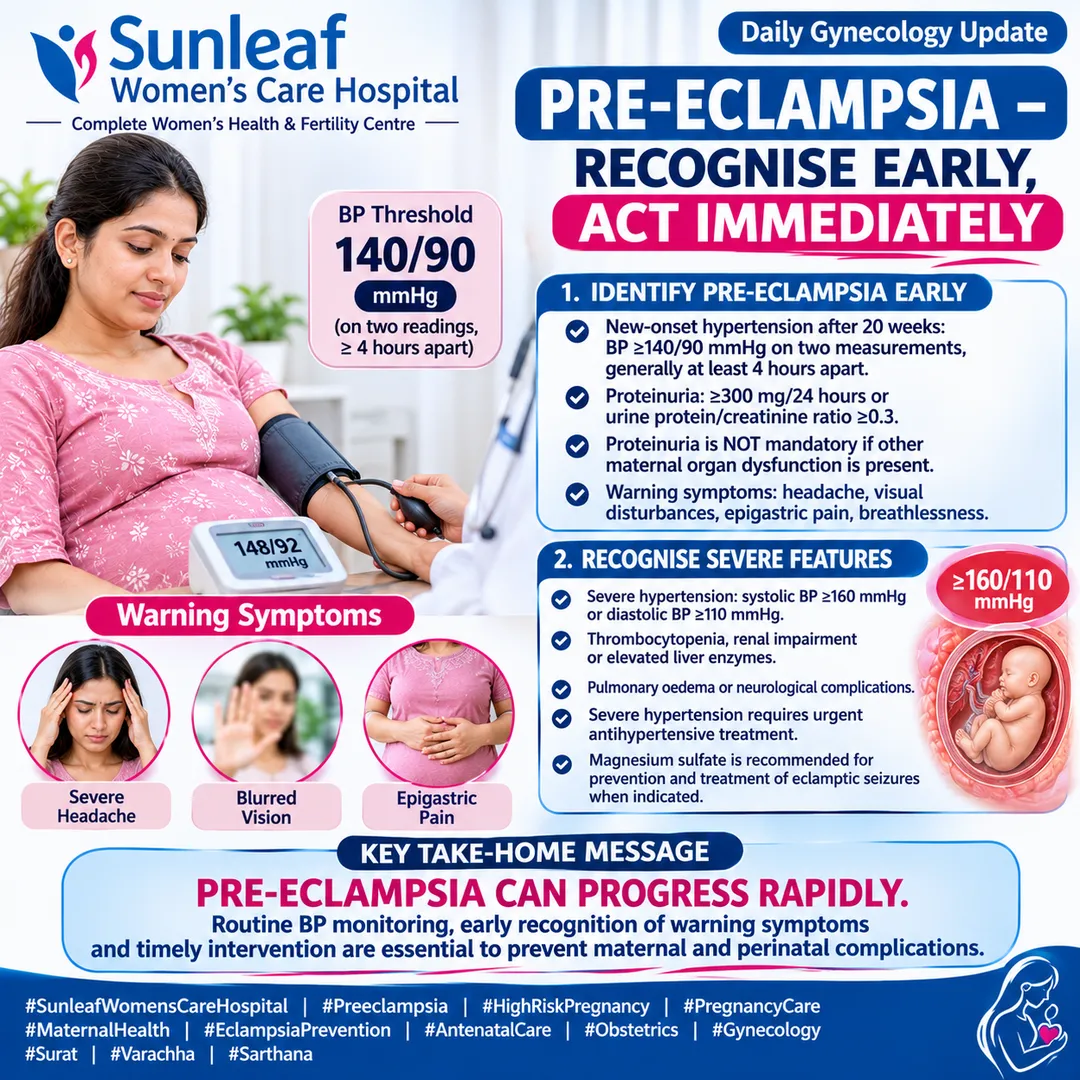
1. IDENTIFY PRE-ECLAMPSIA EARLY
- New-onset hypertension after 20 weeks of gestation: BP ≥140/90 mmHg on two measurements, generally at least 4 hours apart.
- Proteinuria: ≥300 mg/24 hours or urine protein/creatinine ratio ≥0.3.
- Proteinuria is NOT mandatory if other maternal organ dysfunction is present.
- Warning symptoms include severe headache, visual disturbances, epigastric pain and breathlessness.
2. RECOGNISE SEVERE FEATURES
- Severe hypertension: systolic BP ≥160 mmHg or diastolic BP ≥110 mmHg.
- Thrombocytopenia, renal impairment or elevated liver enzymes.
- Pulmonary oedema or neurological complications.
- Severe hypertension requires urgent antihypertensive treatment.
- Magnesium sulfate is recommended for prevention and treatment of eclamptic seizures when indicated.
KEY TAKE-HOME MESSAGE
PRE-ECLAMPSIA CAN PROGRESS RAPIDLY.
Routine BP monitoring, early recognition of warning symptoms and timely intervention are essential to prevent maternal and perinatal complications.
GUIDELINE REFERENCES
- ACOG Practice Bulletin No. 222 – Gestational Hypertension and Preeclampsia.
American Heart Association Journals+1
- WHO – Pre-eclampsia, updated October 2026.
World Health Organization
- NICE Guideline NG133 – Hypertension in Pregnancy.
NICE
#SunleafWomensCareHospital #Preeclampsia #HighRiskPregnancy #PregnancyCare #MaternalHealth #EclampsiaPrevention #AntenatalCare #Obstetrics #Gynecology #Surat #Varachha #Sarthana
Keywords