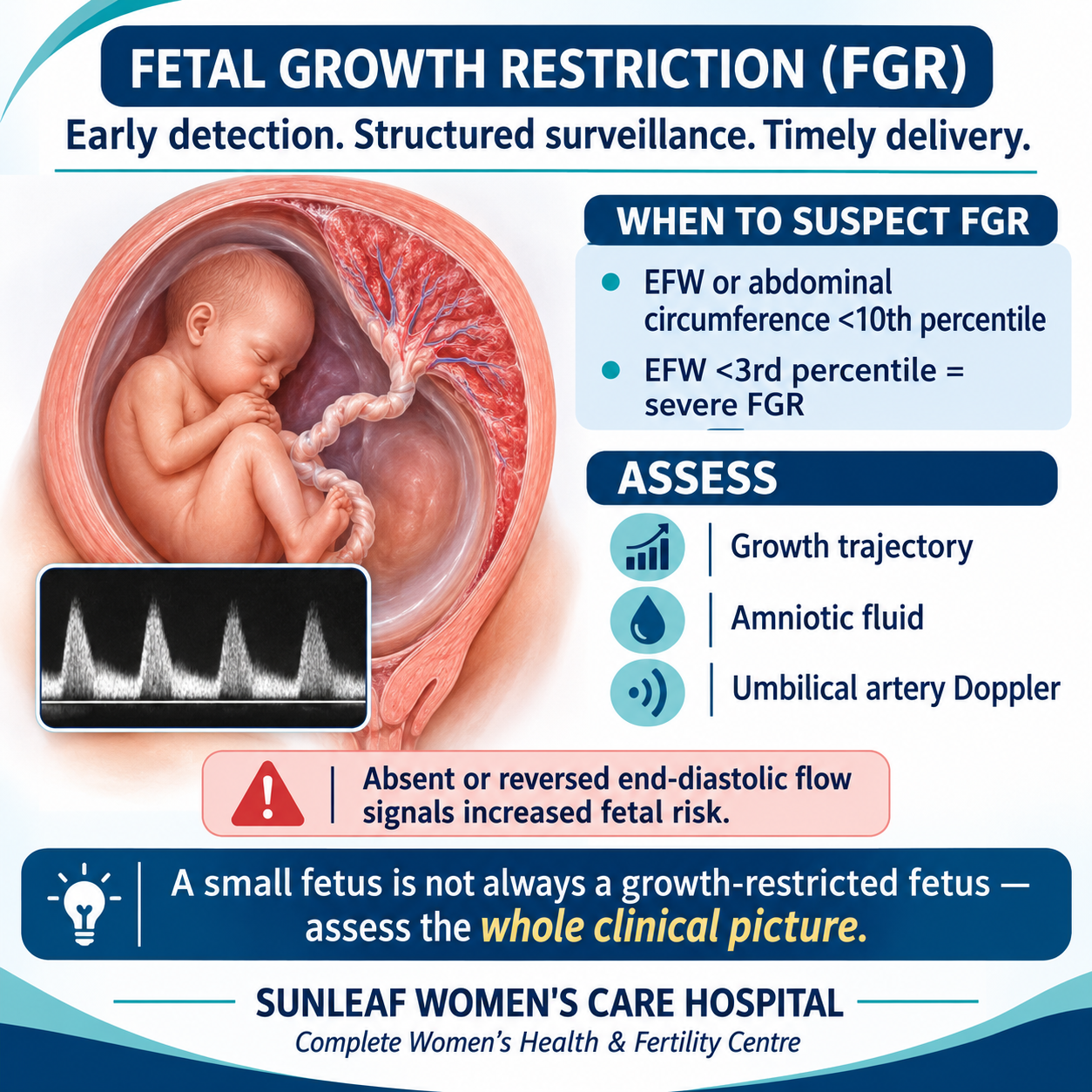
FGR: Early Detection Can Improve Perinatal Outcomes
2 KEY EVIDENCE-BASED MESSAGES
1. Accurate diagnosis matters
- Estimated fetal weight (EFW) or abdominal circumference (AC) below the 10th percentile should raise suspicion of FGR.
- EFW below the 3rd percentile indicates severe FGR.
- Differentiate a constitutionally small fetus (SGA) from pathological growth restriction.
- Assess growth trajectory, amniotic fluid and Doppler findings.
2. Doppler surveillance guides management
- Umbilical artery Doppler is essential in FGR surveillance.
- Absent or reversed end-diastolic flow indicates increased fetal risk.
- MCA Doppler and cerebroplacental ratio (CPR) can provide additional information, particularly in late-onset FGR.
- Timing of delivery should consider gestational age, Doppler findings, CTG and maternal condition.
KEY TAKE-HOME MESSAGE
FGR is not simply a small baby. It is a clinical diagnosis requiring structured fetal surveillance and appropriately timed delivery.
Clinical pearl: A fetus with EFW between the 3rd and 10th percentile and normal umbilical artery Doppler is not automatically equivalent to severe placental FGR. Interpret findings using the complete clinical picture and the applicable guideline.
Guideline update: RCOG issued a July 2026 correction concerning the use of INTERGROWTH-21st EFW charts in the NHS population.
#SUNLEAFWOMENSCARE #FGR #FETALGROWTHRESTRICTION #HIGH_RISKPREGNANCY #OBGYN #PREGNANCYCARE #SURAT #VARACHHA #SARTHANA
Keywords