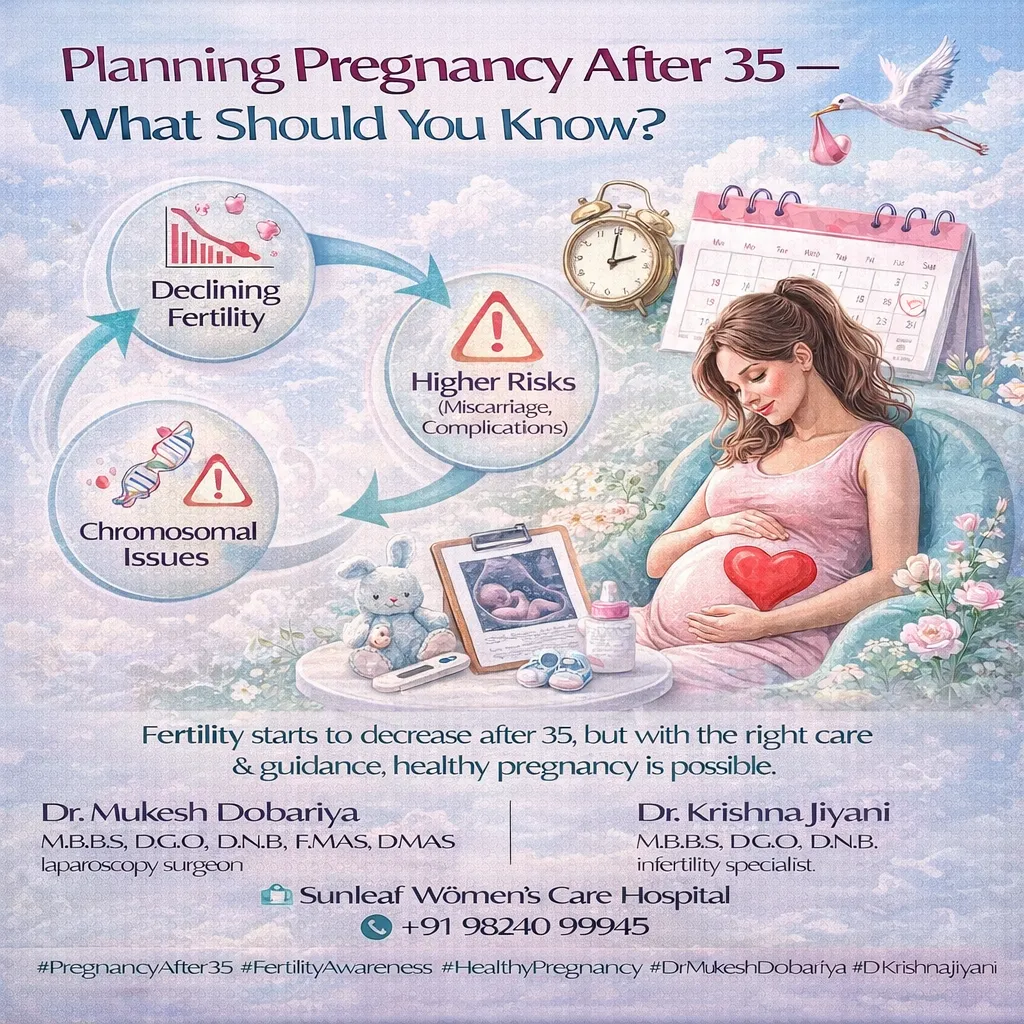
More women today are choosing to plan pregnancy after 35 due to career, personal, or social reasons. While many women have healthy pregnancies in their late 30s, it is important to understand that fertility naturally declines with age, especially after 35.
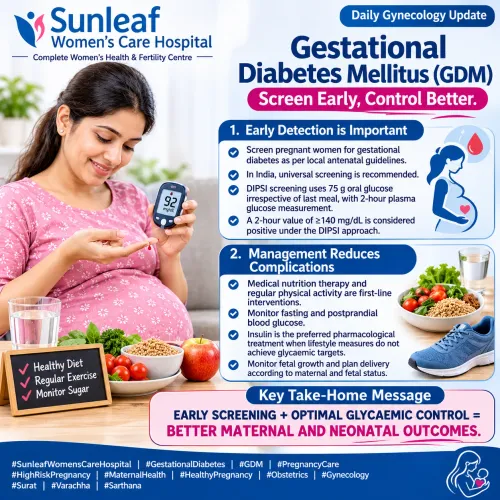
With increasing age, the number and quality of eggs reduce, which can lead to difficulty conceiving, higher chances of miscarriage, and increased risk of chromosomal abnormalities. There is also a higher likelihood of pregnancy-related complications such as gestational diabetes, high blood pressure, and cesarean delivery.
However, with proper preconception counseling, timely fertility assessment, lifestyle optimization, and early antenatal care, many women above 35 conceive and deliver safely. Tests like ovarian reserve assessment, thyroid screening, and early anomaly scans help in better planning and risk reduction.
Age is an important factor — but informed planning and medical guidance make a significant difference.
#PregnancyAfter35 #AdvancedMaternalAge #FertilityAwareness #HealthyPregnancy #HighRiskPregnancy #WomenHealthMatters #PreconceptionCare #DrMukeshDobariya #DrKrishnaJiyani #SunleafWomensCareHospital #SuratWomenCare #SuratGynecologist #Sarthana #Varachha
Keywords