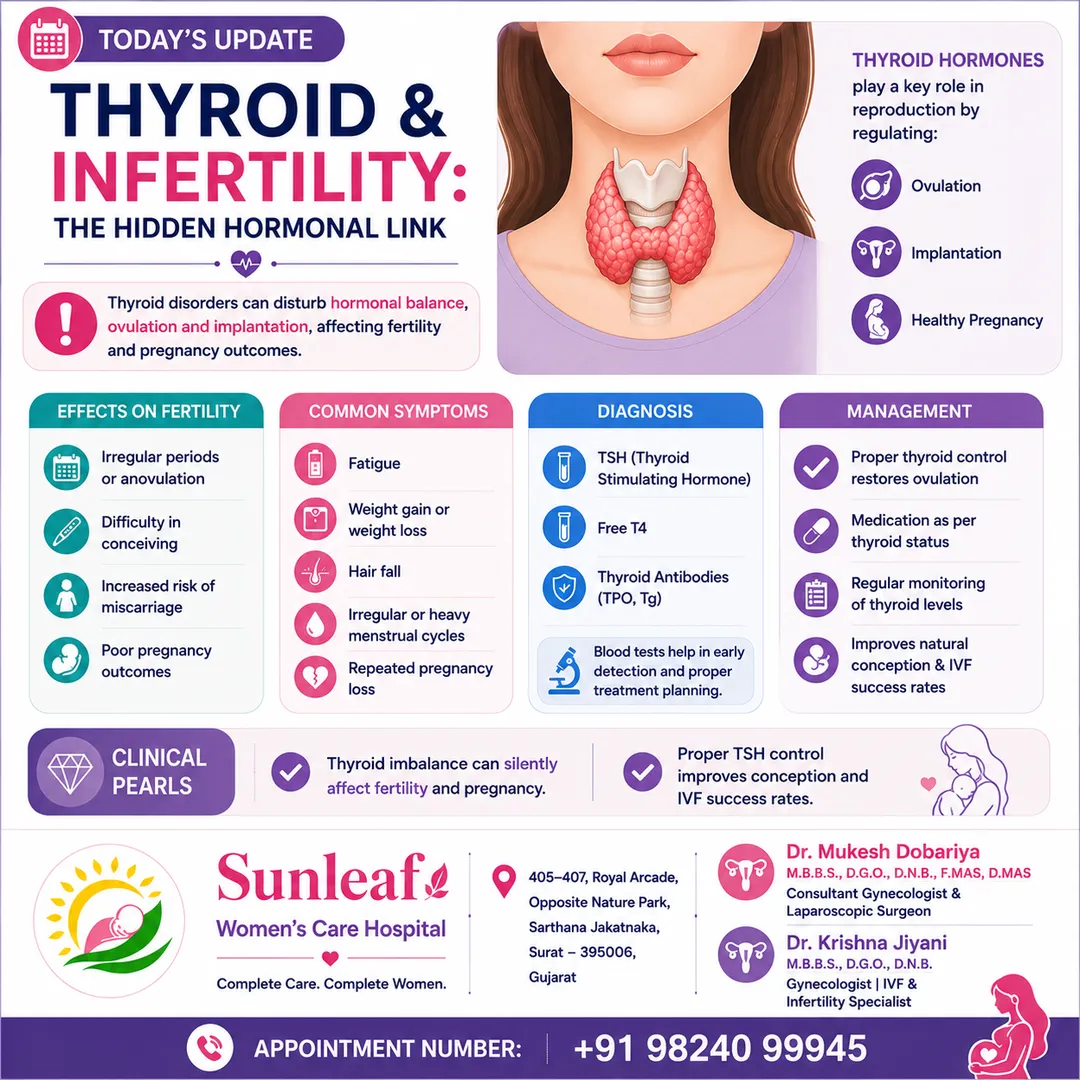
Thyroid disorders are a common but often overlooked cause of infertility and menstrual irregularities in women. Both hypothyroidism and hyperthyroidism can disturb hormonal balance, ovulation, and implantation, thereby affecting fertility outcomes.
Hypothyroidism can lead to irregular periods, anovulation, weight gain, elevated prolactin levels, and difficulty conceiving. Uncontrolled thyroid dysfunction may also increase the risk of miscarriage, pregnancy complications, and poor fetal development.
Women with thyroid-related infertility may present with fatigue, weight changes, hair fall, irregular cycles, or repeated pregnancy loss. Blood tests including TSH, Free T4, and thyroid antibodies help in diagnosis and treatment planning.
Early diagnosis and proper thyroid control significantly improve ovulation, implantation, and pregnancy outcomes. Thyroid function should always be evaluated in women undergoing infertility treatment or recurrent miscarriage evaluation.
Clinical Pearls:
- Thyroid imbalance can silently affect fertility and pregnancy
- Proper TSH control improves conception and IVF success rates
#THYROID #INFERTILITY #HYPOTHYROIDISM #PCOS #IVF #IVFSURAT #FERTILITYTREATMENT #INFERTILITYSPECIALIST #GYNECOLOGY #OBSTETRICS #RECURRENTPREGNANCYLOSS #OVULATION #FERTILITYCARE #INFERTILITYCARE #IVFJOURNEY #WOMENSHEALTH #SUNLEAFHOSPITAL #SUNLEAFWOMENSCARE #SURATDOCTOR #VARACHHA #MOTAVARACHHA #NANAVARACHHA #VALENJA #KAMREJ #VALAK #PANDESARA #PUNAGAM #DINDOLI #PREGNANCYCARE #REPRODUCTIVEHEALTH
Keywords